About NPROXX

NPROXX designs and manufactures high-quality Type 4 pressure vessels for hydrogen storage under high pressures. In fact, our team developed and certified one of the very first Type 4 pressure vessels more than 20 years ago. We believe that innovative hydrogen storage solutions will be a crucial part of the future hydrogen economy.

What’s a Type 4 Pressure vessel?

To understand why Type 4 is so suitable for this role, you need to know the different types of pressure vessel:

  • Type 1: A traditional all-metal bottle made of steel used for storing liquid and gases for industrial processes. Cheap to produce, but heavy
  • Type 2: An additional layer of carbon fibre reinforcement is added round a steel inner tank and shares the load with the metal. This gives it added strength and reduces weight, but makes it more expensive than Type 1
  • Type 3: A carbon-fibre composite vessel, with a steel or aluminium vessel inside. The carbon fibre outer vessel takes the load. With more carbon fibre involved, costs are higher than type 2, but higher pressures can be achieved
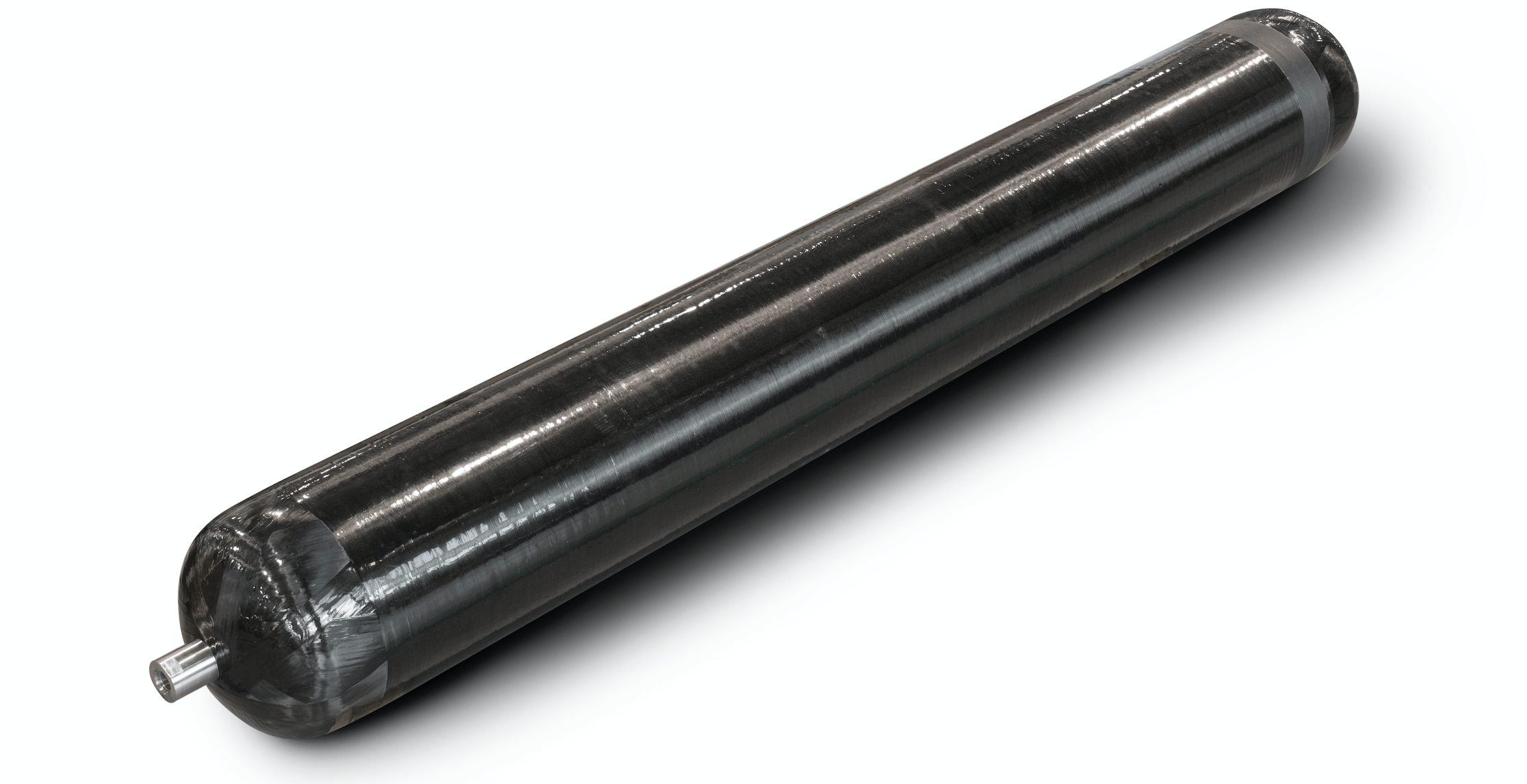
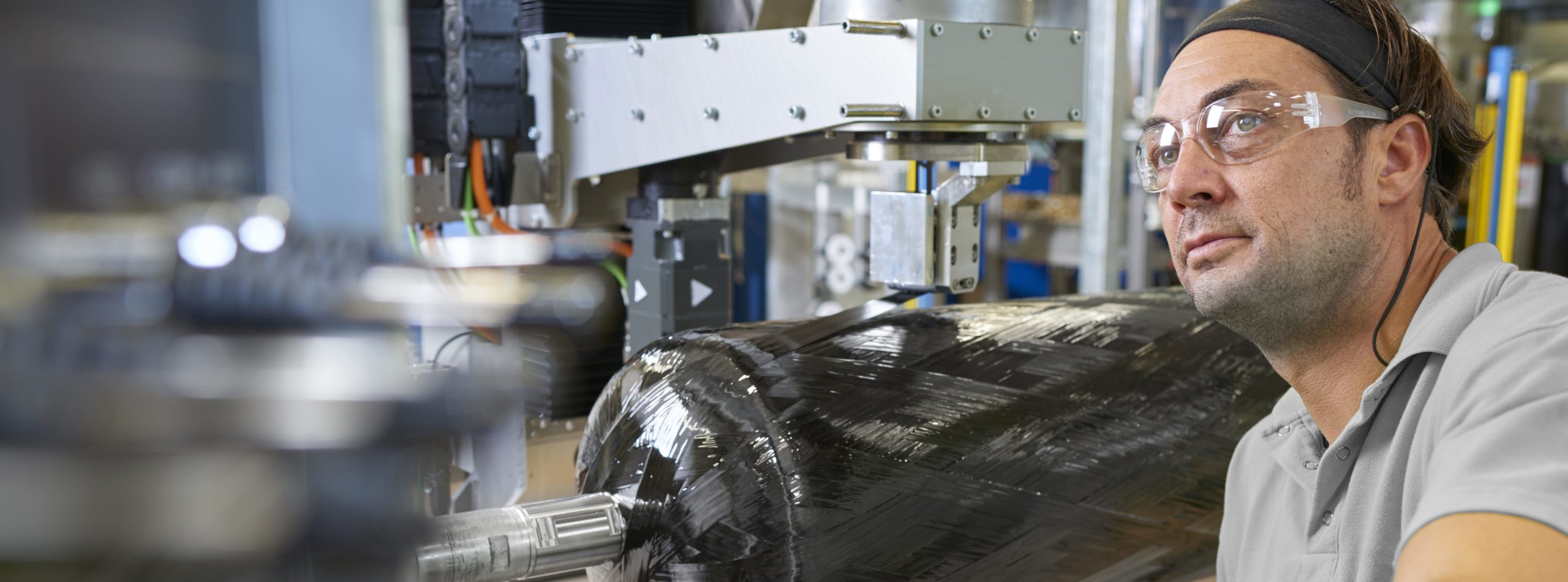
  • Type 4: A vessel made of all carbon fibre, with an inner liner of polyamide or polyethylene plastic. Characteristics are a much lower weight and very high strength. Comparatively expensive, because of the volume of carbon fibre

What are the advantages of a Type4 pressure vessel?

While most basic storage needs can be fulfilled by basic Type 1 vessels, weight becomes a factor when pressure vessels need to be transported. The weight of metal and part-metal tanks adds to the cost of transport and this is where carbon fibre becomes appealing.

Another factor is strength. Carbon fibre adds innate strength to the vessel, enabling it to take on greater loads. Carbon fibre also significantly increases the corrosion resistance and the fatigue resistance of pressure vessels, which makes safety a key advantage.

Finally, the other key advantage of carbon fibre composite pressure vessels (type 4) is volume. Because of their innate strength, carbon fibre type 4 pressure vessels can store hydrogen at high pressures. By combining several of these within a container unit, large volumes of hydrogen can be stored, which reduces the traffic from producer to consumer and decreases the energy consumption during transportation.
NPROXX AT HANNOVER MESSE

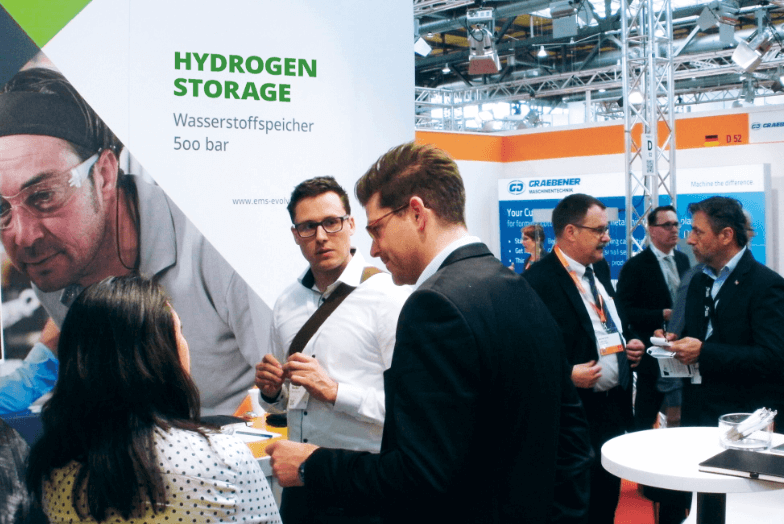
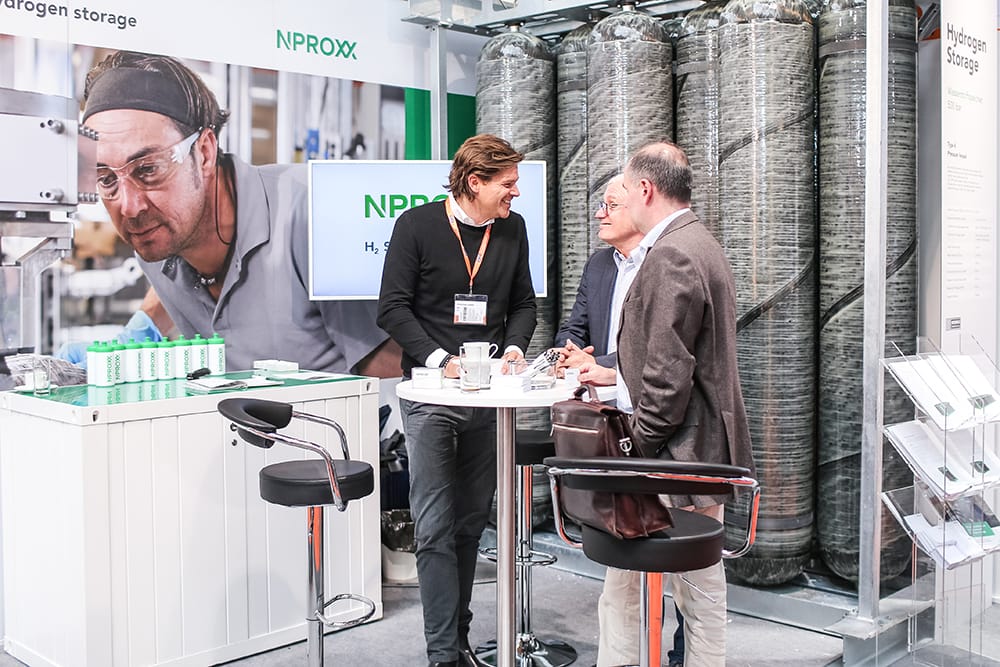
NPROXX recently exhibited at Hannover Messe, the world’s leading show for industrial technology. 6500 companies from across the world exhibited at the five-day fair, which took place in Hanover, Germany in early April.

The NPROXX stand was situated in Hall 27, the Hydrogen Fuel Cell Batteries Hall, where many companies involved in this developing area of technology were exhibiting. For the very first time NPROXX displayed its advanced 700 bar hydrogen tank for use in automotive applications. Central to the NPROXX stand was a real-size carbon fibre pressure vessel system designed for storing hydrogen at pressures of up to 500 times normal atmospheric pressure. “Our exhibit was really successful and helped us to explain how our solution works to store and transport hydrogen for various mobile applications” explains Johannes Lorenz, Director Marketing and Sales at NPROXX.

The show has been a success for NPROXX in expanding its reach and driving awareness in the many different industrial areas that have an interest in developing hydrogen storage solutions. “We have deepened existing business contacts and made many new contacts that we are now talking to” says Johannes. “We had strong interest from across the world and throughout the supply chain, including wind farm operators, gas companies, fuel station companies, automotive and bus companies, and transport operators. This is a market in development and it is crucial that NPROXX is present at these major events to ensure we are seen, and we can help to develop the industry.”

Learn more about our innovative H2 storage solutions by watching our on-stage interview video.

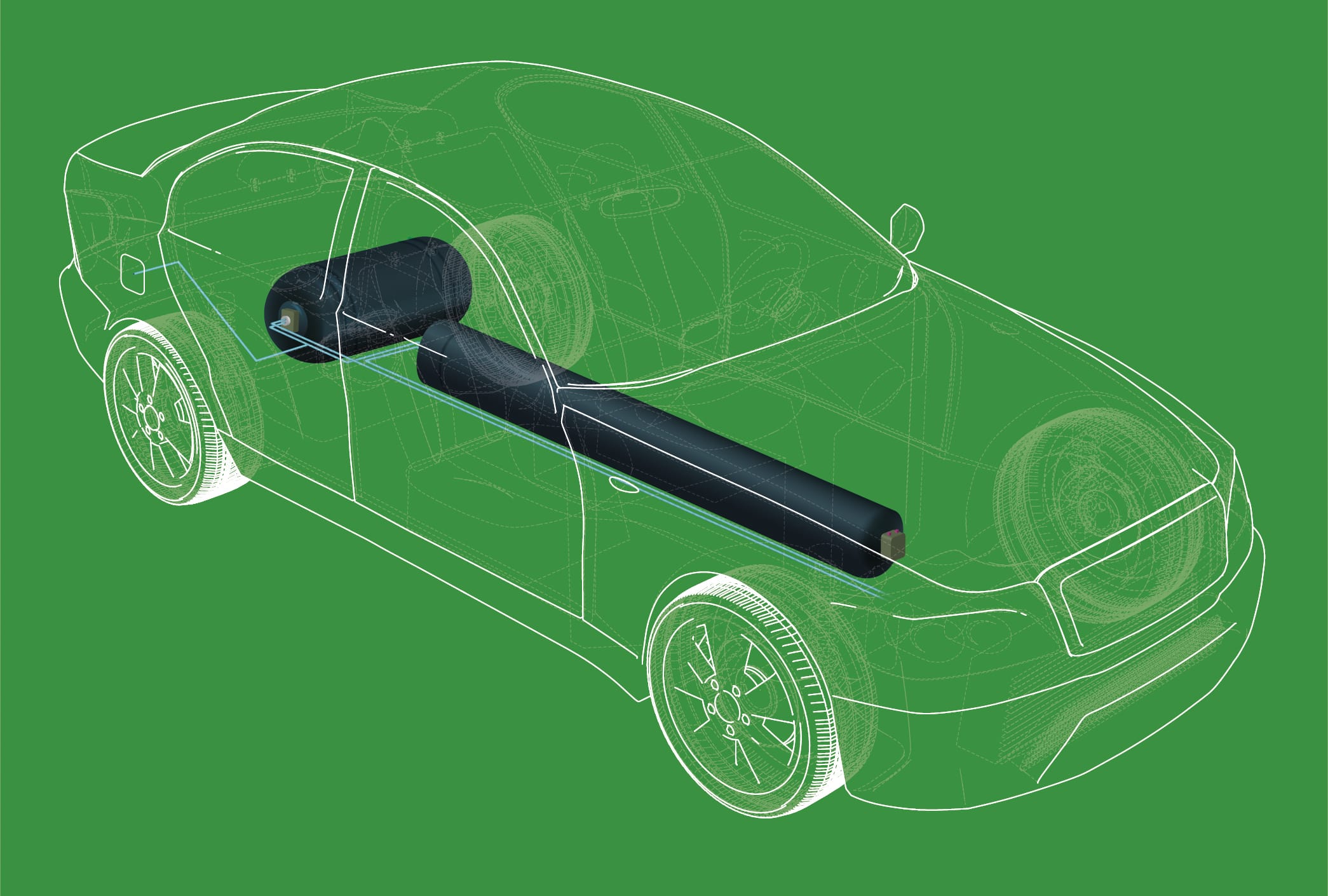
NPROXX introduces an advanced Type 4 pressure vessel for use in automotive applications. The new lightweight product which reaches a gravimetric storage density of 6.4% will be on display for the first time on 1 to 5 April at the Hannover Messe.

This development opens the door for NPROXX to design, manufacture and supply hydrogen storage for use in a wide range of automotive applications, from mid-sized cars such as saloons, estates, SUVs and related vehicles.

High storage density

NPROXX pressure vessels are especially well suited to use in the automotive industry because of their high gravimetric storage density of 6.4 %. Compared to similar products, NPROXX’s 700 bar pressure vessel boasts a better storage-to-weight ratio, enabling automotive designers to plan and build the next generation of hydrogen vehicles with more fuel and less tank weight on board.

“Our hydrogen tanks are lighter than other competitive products on the market” comments
Dietmar Müller, Technical Director of NPROXX. “With four decades of experience in the series production of wound carbon fibre components, we are highly experienced in manufacturing reliable components in CFRP that achieve the same performance with less material usage and the same quality and performance. We have the process, knowledge and experience to deliver innovations that can build value and competitive advantage. Our state-of-the-art manufacturing facilities in Germany are ideally suited to series manufacturing of hydrogen pressure vessels at high volume for use in the automotive industry.”

Hannover Messe

NPROXX will be in Hall 27, stand D52/1 at the Hannover Messe.

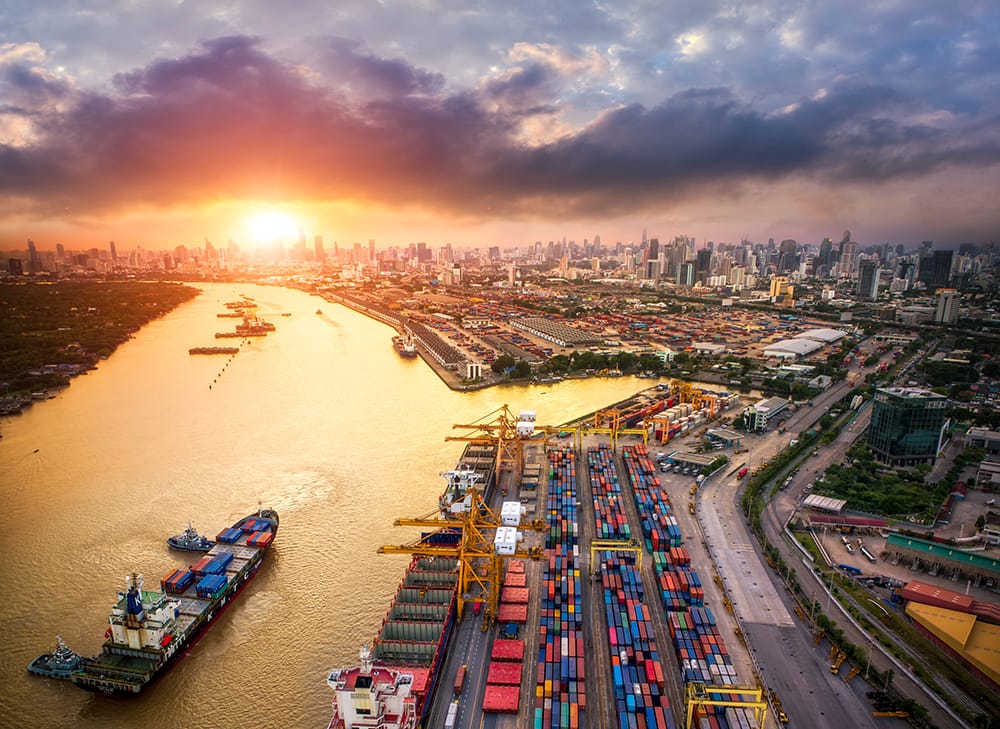
Globally the shipping industry is a major contributor to the production of greenhouse gases. This goes largely unnoticed when ships are on the high seas, but where shipping and civilisation come into close contact, such as in major port cities and on navigated rivers, governments and residents are increasingly concerned by the levels of air pollution that shipping causes.

While land-based pollution sources are being successfully curbed and reduced across the world, the level of sulphur oxide, nitrogen oxide and particulate matter pollution caused by international shipping trade continues to rise as the volume of shipping activity goes up.

Inland cities such as Cologne, on the Rhine in Germany, or Rotterdam in The Netherlands, Europe’s largest port, are particularly prone to suffering from air quality issues caused by water-based emissions from burning shipping fuel oil. In fact The Umweltbundesamt, the federal agency for environmental protection in Germany, states that in some major German cities river pollution is responsible for up to 30% of the total air pollution.

So what if those ships could be adapted to run on a cleaner energy source instead? The use of liquid natural gas is one possibility, as is the development of low-sulphur fuels. These approaches are thought to be able to reduce harmful emissions by more than 80%.

Another highly-feasible solution would be the use of hydrogen fuel cells to virtually eradicate these harmful emissions when ships are close to built-up areas on land. Smaller river ships and barges are capable of running solely on the new generation of hydrogen fuelling systems, which are developing rapidly. Refuelling stations can quickly swap out or refill hydrogen tanks just in the same way they do with current fuel. Ocean-going ships can be adapted to use hydrogen power as part of a blended solution, switching to hydrogen fuel when close to land, whilst in port and when docking. Ships could also connect to fuel cell land power systems whilst they are docked. Ultimately, if the hydrogen fuel comes from a renewable source the target of sustainable and emission free fuel is achievable.

Hydrogen power relies on the safe storage of highly pressurised hydrogen fuel in ultra-strong and ultra-reliable pressure vessels. NPROXX has been producing similar pressure vessels for four decades – our products are at the heart of the rapidly changing world of transport. We are a world leader in the design and implementation of stationary and mobile hydrogen refuelling and onboard pressure vessel applications. To find out more please contact us.

Benefits of hydrogen power usage in shipping

  • Eradication of emission of harmful gases
  • Improve air quality in cities and built up areas
  • Reduction in greenhouse gas emissions
  • Easy re-fuelling processes, with modular infrastructure
  • Cost-effective against other low-emission fuel solutions.
Type 4 pressure vessel

The NPROXX 500 bar type 4 pressure vessel is now certified, enabling customers around the globe to transport and store hydrogen in large volumes.

NPROXX is pleased to announce that its advanced type 4 carbon fibre pressure vessel has been certified. The pressure vessel, which operates at a nominal working pressure of 500 bar, has a usable H2 capacity of 6.5kg. It was approved on February 4 by the certification authority TÜV, and as a result the NPROXX product is now fully authorised to be used for hydrogen transportation on roads according to the international regulation for transport of dangerous goods (ADR 6.2).

Advanced carbon fibre pressure vessels
“This certification is a remarkable milestone for NPROXX”, says NPROXX Managing Director Reinhard Hinterreither. “This achievement confirms our technical approach is correct, the product is robust and market ready. It enables us to market our advanced carbon fibre pressure vessels and the provision of related services to markets across the globe.”

The ADR 6.2 certification is very demanding. It includes burst tests and fall tests, burning and ballistic testing and a detailed documentation process.

Advanced pressure vessels are widely considered as a key element of the growing hydrogen industry, allowing hydrogen transportation and storage in large volumes. The new product will come into operation for the first time within a hydrogen fuel station project in Germany, where
81 pressure vessels will be interconnected within a 20-foot-container to function as a hydrogen storage system solution.

For more information on this type 4 Pressure Vessel please contact us.

We will be at a number of high profile hydrogen storage events this year. We hope to meet you at some of them.

Hydrogen & Fuel Cells Energy Summit
6-7 February 2019
Madrid
wplgroup.com

FC Expo
27 February – 1 March 2019
Tokyo
fcexpo.jp

Energy Storage 2019 Together with STORNETIC
12-14 March 2019
Düsseldorf
energy-storage-online.com

Hannover Messe
1-5 April 2019
Hannover
www.hannovermesse.de

Jahrestreffen EnergieAgentur.NRW
September 2019
Location tbd
www.energieagentur.nrw

Please Contact us to book appointments to meet us at these events.

nproxx logo

Leading supplier of high-quality carbon fibre products and specialist manufacturing services divides as hydrogen economy takes off.

EMS, a leading supplier of high-quality carbon fibre products and specialist manufacturing services evolves into two new companies: NPROXX and Pronexos. NPROXX will carry on the business and activities of hydrogen storage solutions using composite high pressure vessels, Pronexos will continue the balance of all other business activities so far conducted under the brand of EMS.

Carbon fibre pressure vessels for the hydrogen economy

“The reason for the split is the formation of the new hydrogen economy”, explains Reinhard Hinterreither, who will lead NPROXX as Managing Director together with Olivier Marques-Borras. “We believe that hydrogen will be a key energy source in the future. And it is our strong ambition to make our solutions play a key role in this new exciting economy. For this reason we are from now on marketing our pressure vessels internationally under the fresh brand NPROXX.”

As a first step of growth a new NPROXX head office will be opened at Heerlen, The Netherlands, 1 October while NPROXX’s manufacturing capacities will be extended at the site in Jülich, Germany. Pronexos’ activities, which include carbon fibre rollers for the paper, film/foil and converting industries as well as engineering, design and specialist manufacturing for the aerospace and semiconductor industries will be continued at both sites: Almelo (The Netherlands) and Jülich (Germany). The name EMS will no longer be used.

New websites are available on the domains nproxx.com and www.pronexos.com.

Hydrogen - future for rail vehicles

Across the world, transport is being revolutionised by the rapid adoption of electric and hybrid vehicles, especially in urban environments where the distances travelled are relatively short. The aim is to significantly reduce the reliance on fossil fuels for power, which will bring environmental improvements by reducing carbon dioxide emissions and the emission of other pollutants produced by burning diesel and petrol.

At the same time, another sustainable solution is becoming increasingly more viable. Hydrogen powered vehicles use hydrogen gas (the universe’s most abundant and lightest element) through fuel cell technology to produce power, and the only by-product of this process is water. Hydrogen is produced in great volume by many industrial processes, such as in the chemicals industry, and is currently often just burned off. So the opportunity for creating clean, sustainable power from hydrogen is very exciting to keep our transport systems working.

The key challenge lies in being able to safely store hydrogen at sufficient pressure to ensure that a vehicle using hydrogen power has enough fuel to deliver a viable range – for example, a city bus or tram needs to be able to fulfil its route several times on one tank of hydrogen.

This is where NPROXX’s expertise lies – we produce lightweight, high strength pressure vessels made from carbon fibre that can store hydrogen at a pressure sufficient to enable viable public and private hydrogen-fuelled transport. Our engineers and designers were the first in Europe to make certified a Type 4 pressure vessels. Some of our pressure vessels have been running flawlessly for many years in industrial applications in the energy industry. NPROXX continues to lead the market today.

Today we are an advanced global supplier of pressure vessels to major manufacturers and service providers in the following areas:

  • Hydrogen powered cars, where we are working with several manufacturers to develop pressure vessels that can enable cars to run on hydrogen
  • Public buses, where both the storage of H2 in the bus itself, and the refuelling station are issues that we have designed solutions for
  • Vehicles for use in an urban environment where lots of short journeys are required
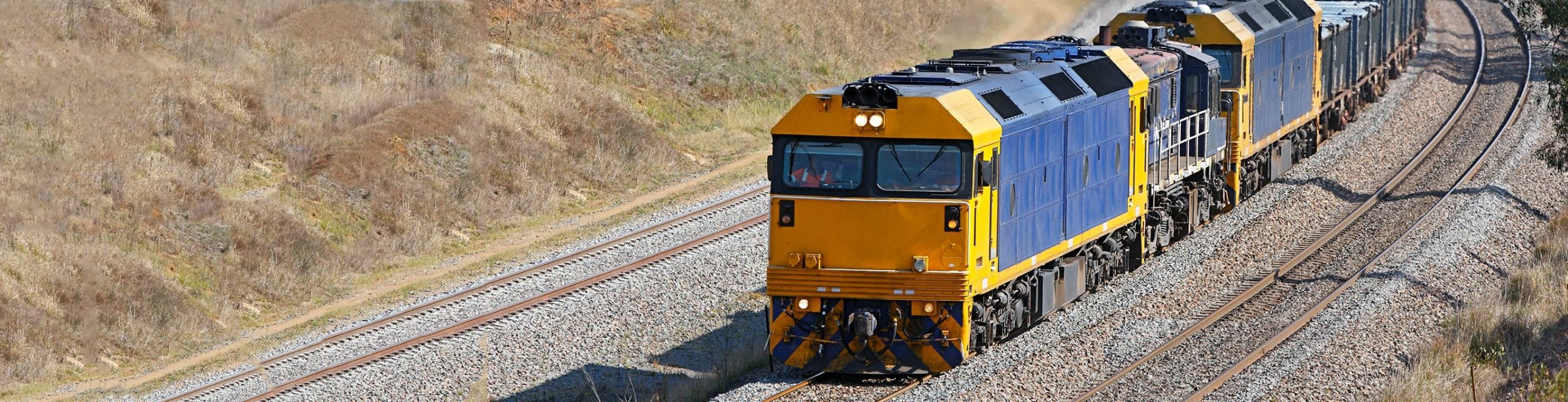
  • Trains, specifically regional trains in situations where an overhead electric cable may not be applicable or achievable
  • Aerospace, where ultra-reliable gas storage under pressure is a critical requirement.
Pressure vessel news

NPROXX is a highly skilled and experienced supplier of carbon fibre reinforced polymer (CFRP) products, with extensive manufacturing facilities in Germany as well as significant research and development capability.

Our expertise in creating CFRP products stems from years of experience in producing a broad spectrum of carbon fibre reinforced products in the energy industry. As a global leader in its business, NPROXX’s parent company designs, manufactures, installs and maintains high-end CFRP components used in facilities in Europe and the US.

Decades of experience in carbon fibre

NPROXX designers and engineers have nearly four decades of experience in using carbon fibre to make products which must survive and operate to exacting standards in highly demanding environments. We are experts in creating safe, innovative and cost-effective solutions for these products.

NPROXX uses carbon fibre products to provide high quality, reliable high strength products with a range of innovative approaches to improve performance or deliver specific properties. Our history and current capabilities enable us to deliver:

  • High-end manufacturing of advanced CFRP products such as pressure vessels for hydrogen storage and other gas storage applications, and rollers for the printing and packaging industries
  • Significant expertise and engineering capability, gleaned from decades of producing CFRP products for the nuclear energy industry
  • Very high standards of compliance and performance in safety, security, documentation and traceability of products.

If you would like to know more about NPROXX and our capabilities in CFRP manufacturing, please get in touch.