With more and more hydrogen refuelling stations opening across Europe and the world, access to the fuel is increasing and the viability of hydrogen-powered transport to address the problem of carbon emissions and pollution in urban centres increases.

Much focus is being given to the need for improvements to hydrogen storage and transport infrastructure. Until the ‘man in the street’ can drive to a local refuelling station and easily and quickly fill up his car with hydrogen, the true advantages of H2 fuel to reduce and even eliminate the use of carbon fuels can’t be realised.

The number of hydrogen consumers increases every day. In the near future high volumes of hydrogen will be transported to the fuelling stations. NPROXX provides 300bar and 500bar transport system solutions and a stationary system solution at 900bar. Depending on the number of trips and distances customers can choose the best solution at 300 or 500 bar depending on the individual need.

“500bar pressure vessels deliver a good combination of volume-to-cost for the market” explains NPROXX Marketing Director Johannes Lorenz. “In addition it can be used for direct fuelling of 350bar H2 buses. This avoids short peak compressor operations.

Above 500bar and according to current standards, pressure vessels become more expensive to manufacture and that cost rise leads to a diminishing of the value chain. “At NPROXX we realize that improvements to the value chain are the key to making mobile refuelling infrastructure more achievable and affordable” concludes Johannes.

NPROXX end-to-end solution

NPROXX manufactures a plug-and-play solution for mobile hydrogen refuelling infrastructure and transport based on efficient and safe 300 and 500bar storage in carbon fibre type4 pressure vessels from point of production to refuelling station. To find out more please contact Johannes Lorenz on contact@nproxx.com.
Hydrogen storage

Hydrogen power is widely regarded as a key part of the drive to reduce urban pollution and move away from carbon-based transport. But however efficient hydrogen fuel cells become at converting hydrogen gas into power, key challenges remain: how can society rapidly develop hydrogen storage and delivery infrastructure? And how can hydrogen fuel storage be integrated into existing transport systems?

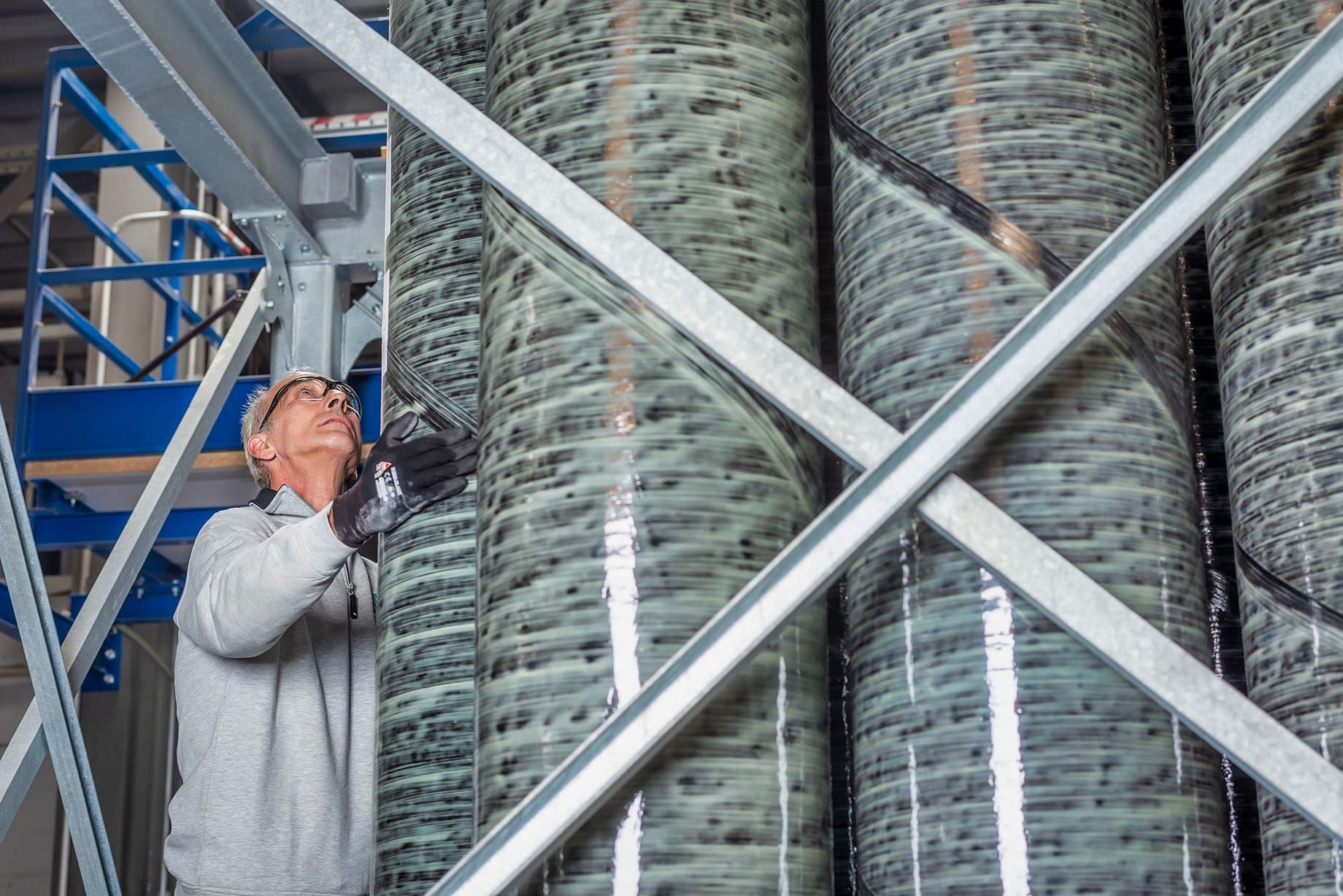
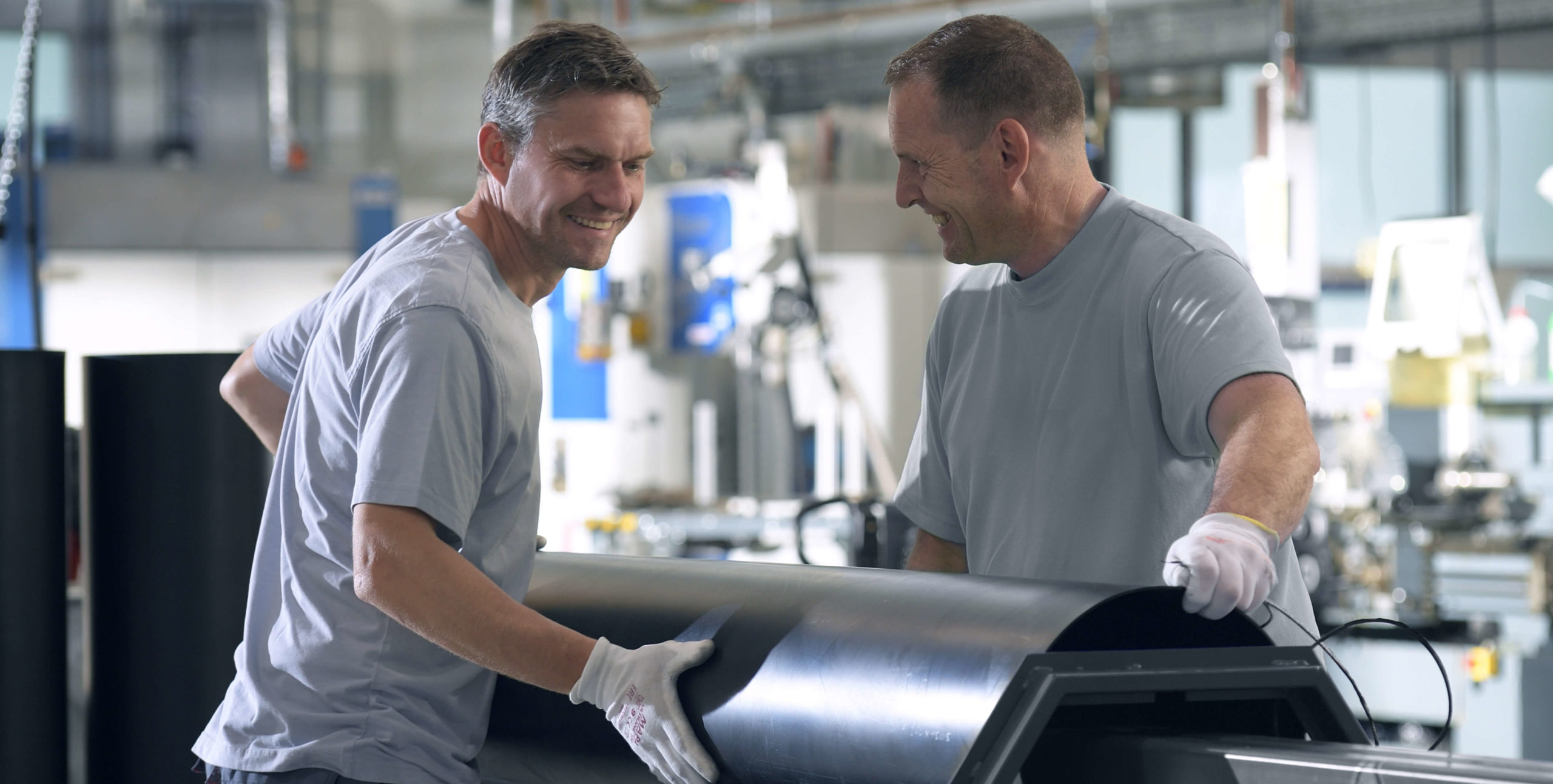
NPROXX is a world leader in manufacturing type 4 pressure vessels for hydrogen storage, and our advanced hydrogen storage systems are enabling new innovations in hydrogen-powered transport. We are leading the way with some of the most innovative solutions in hydrogen storage and transport, including:

• Working in partnership with various leading auto manufacturers in Europe and beyond, we are developing new pressure vessel shapes and sizes, to fit the chassis and bodywork designs of existing and new automobile models

• In Germany, we have developed special framework and mountings to hold hydrogen storage pressure vessels securely on the roof of hydrogen-powered trains. For this solution NPROXX produced much lighter, stronger mountings and significantly longer pressure vessels, increasing the capacity of hydrogen storage on the roof from other designs, and reducing the number of valves and other connecting pieces while also improving the stability of the rig

• We have also designed, manufactured and installed significant storage capacity at a hydrogen refueling station for buses at Meckenheim outside Cologne, Germany, working as part of a consortium

• We are working (under non-disclosure agreements) with several other partners ranging from global enterprises to local innovation hubs on a range of projects to integrate innovative and complex hydrogen storage solutions into transport applications, designing and working with many complex structures such as mountings, gas systems and other transport infrastructure.

With a background in precision manufacturing and an exceptional approach to safety, security and quality (including documentation and traceability) that is embedded in our company culture, NPROXX is an ideal partner for any innovative manufacturer or transport company looking to open up the new hydrogen economy. NPROXX can provide everything from an end-to-end solution for hydrogen power, to the series manufacturing of large numbers of pressure vessels to very high-quality standards.

hydrogen, fuel of the future

NPROXX recently exhibited at the HUSUM Wind Trade fair in Husum, Germany. Celebrating its 30th year in 2019, HUSUM Wind is the leading exhibition showcasing technology and innovation in the wind turbine energy generation market, in Germany and across northern Europe.

“This was a great opportunity for NPROXX to meet the leading players in wind power technology, and to introduce to them the concept of sector coupling, by which excess energy produced by wind power installations can be used to create pure hydrogen gas from water through electrolysis” explained Michael Ismar, NPROXX sales manager.

Green hydrogen

“This hydrogen can be stored under high pressure in very strong and light pressure vessels made from carbon fibre. Hydrogen storage and transport solutions are NPROXX’s speciality, so there is a clear connection between windfarm owners and the consumers of clean energy. Stored Hydrogen gas can be used to power buses, trucks and cars in urban areas. In this way the excess energy that wind farms produce, for example at night-time when power demand is low, can be captured and used effectively. This opens up a new revenue stream for wind farm owners producing green hydrogen for other sectors, independent of the power market. NPROXX is leading the way in developing stronger, lighter and larger pressure vessels in carbon fibre that can make this a reality.”

Husum is situated on the North Sea coast in Schleswig-Holstein, the northernmost province of Germany, close to many German off-shore wind power installations.

Watch our video

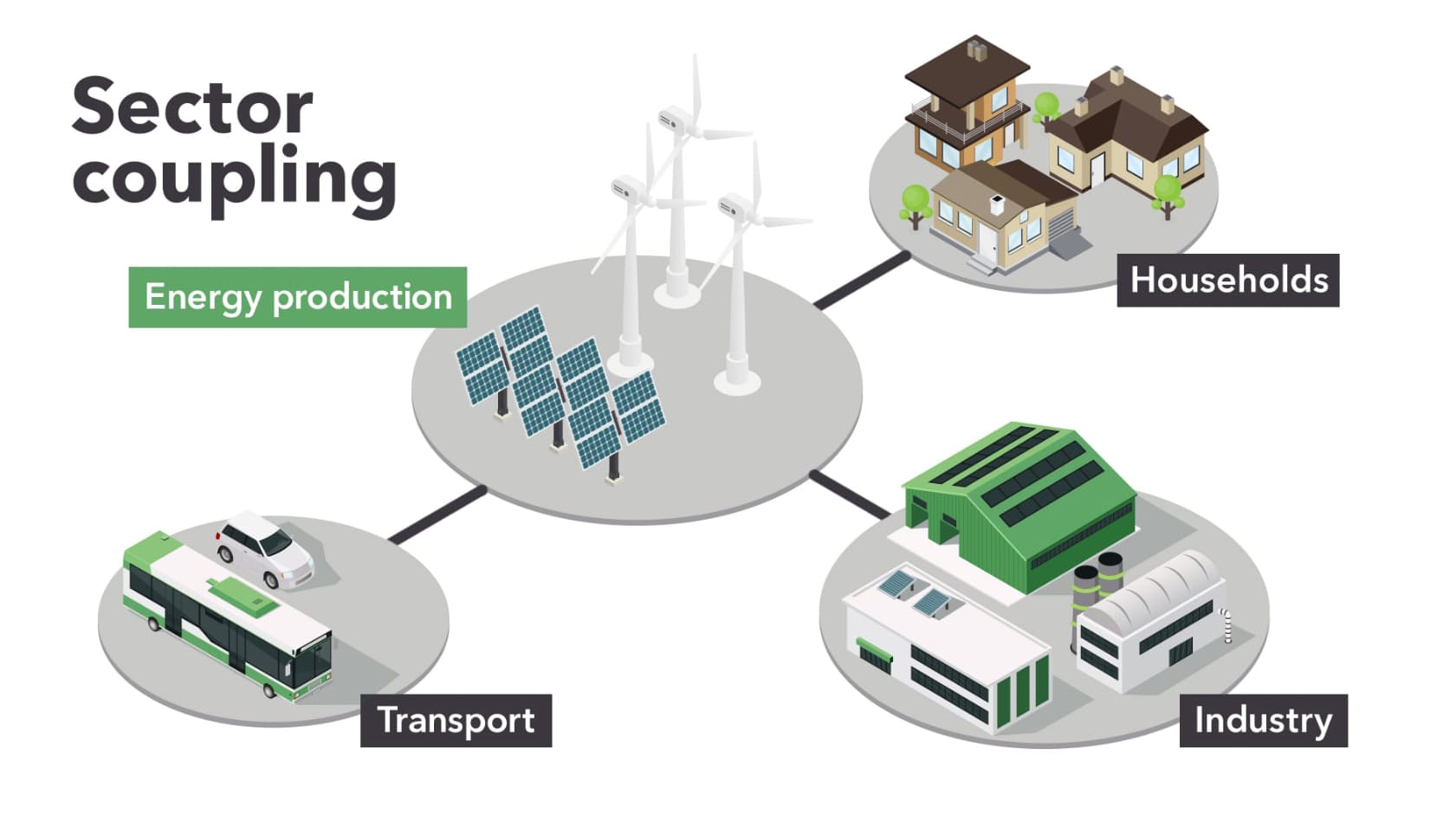
Sector coupling: Energy production, Households, Industry, Transport

Across the world governments are actively engaged in reducing carbon emissions and seeking alternatives to fossil fuels to meet our daily energy needs. The use of hydrogen to replace carbon-based fuels has significant advantages both globally and locally: by reducing climate-damaging carbon emissions; and by improving local air quality in urban areas by cutting out the emission of particulate matter and NOx gases.

The production of the Hydrogen needed to fuel this global decarbonisation also has an environmentally positive option. Currently much of the world’s hydrogen production is a by-product of industrial processes, which consume fossil fuels. But the EU, for example, has a target to cut carbon emissions by 95% by 2050. One important solution to creating emissions-free fuel will be ‘Green’ hydrogen, which is produced from sustainable sources such as wind farms and solar installations.

Sector coupling: what is it?
The four main sectors where carbon consumption has to be reduced are: energy production; industry; transport and heating. ‘Sector coupling’ describes an integrated approach whereby renewable energy production is transferred among these sectors efficiently. This integrated approach is needed to get the best out of hydrogen’s potential, enabling the transfer of energy from one sector to another, and enabling the complete decarbonization of these key sectors.

As an example, to integrate renewables fully it is possible to convert electricity from wind, solar and hydro farms into hydrogen gas using an electrolysis process. Water is split into hydrogen and oxygen using electricity. This hydrogen gas can then be safely stored in high-pressure storage tanks such as the range produced by NPROXX, transported to refueling stations and used to power private vehicles, city buses or heavy-duty vehicles. This example highlights how hydrogen can efficiently capture and transfer energy from one sector to another.

There are many other areas where hydrogen can be used to replace fossil fuels. Recently new technological developments have enabled ‘net zero’ emissions to become a possibility for the maritime sector. Many countries are pursuing this goal. For example, the world’s first ocean going hydrogen ferry is currently being built in Scotland to allow climate-neutral transport of 120 passengers and 18 vehicles to the Orkney Islands. In sea- and river-port cities, the use of hydrogen for shore-side power supply of ships will play a more and more significant role. All of these technological advances will require a ‘sector coupling’ approach in future.

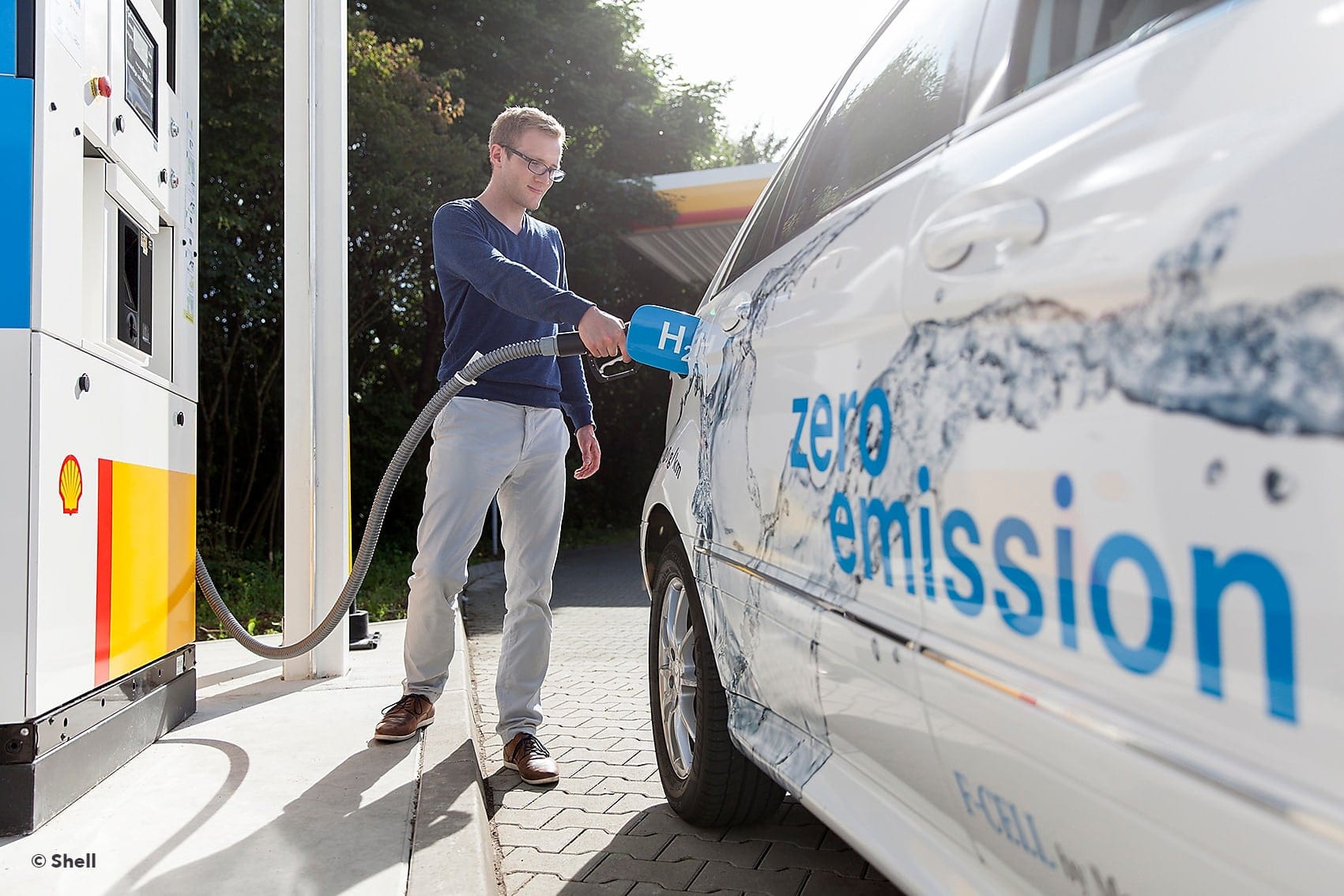
Filling a vehicle with hydrogen

With several hydrogen-powered vehicles already available on the market and almost every major car manufacturer planning to launch a range of hydrogen powered vehicles for personal use, it seems as though hydrogen really is the fuel of tomorrow. But before we see the mass take-up of hydrogen as a fuel to combat pollution and carbon dioxide emissions for personal motoring, car drivers need to be certain they can fill up their cars.

The number of hydrogen refueling stations in Europe is expanding rapidly. Germany leads the way. Having already developed over 70 refueling locations, a new hydrogen station opens in Germany every two weeks currently. By the end of 2019 an estimated 100 refueling stations will be available for cars to use.

The actual refueling process of a hydrogen powered vehicle is fairly simple, and very similar to typical petrol/diesel pumps. A dispensing nozzle pumps hydrogen into the vehicle at the required pressure, while the user can track progress on a user interface, which contains various displays showing pressure, fill level or measured quantity.

Undoubtedly the biggest challenge facing take up of hydrogen as a fuel will be the provision of convenient refueling infrastructure. Even Germany can only currently sustain a hydrogen supply to major cities and routes. Nevertheless the situation is changing, and as the impetus to replace petrol and diesel rises, the need for hydrogen infrastructure becomes more pressing.

Inevitably the choice of hydrogen vehicles will also affect the take-up. An attractive range of compatible vehicles and a corresponding supply of infrastructure are needed. Even with the production of specialised hydrogen vehicles such as the Toyota Mirai or the Hyundai Nexo, consumers will not venture into hydrogen power without absolute certainty of adequate and easy access to hydrogen refuelling stations. This is why it is vital that refuelling stations are constantly being developed in order for clean hydrogen power to grow.

Hydrogen powered buses

While hydrogen power is already in use in city transport networks, regional transport is another area where hydrogen power has significant potential. Regional buses, trams and trains often cover high distances while crossing a region, and these distances can make the use of battery power very hard to sustain. Hydrogen buses, for example, are frequently capable of completing 600 kilometres between refueling.

Hydrogen fuel is well suited for providing greater range, and so can be used as a direct replacement for diesel and petrol. Use of hydrogen buses, for example, can massively reduce the levels of particulate pollution nitrogen oxides and carbon dioxide that a regional transport authority or service provider’s fleet emits.

Along with the obvious pollution benefits, hydrogen buses will also be lighter (and therefore more efficient). Batteries and fuel tanks are heavy, while hydrogen is the lightest element in the periodic table, so even at very high pressures the comparative weight of hydrogen to other fuels is compelling. This can have a positive impact on the infrastructure of cities, as lighter vehicles will have less impact on delicate structures like inner city bridges.

Regional train networks can also benefit from hydrogen power. By replacing heavy-polluting diesel trains with hydrogen-powered units that can travel 600-1200kms between each re-fuel. Using NPROXX’s new refueling concept and high-pressure storage tanks, regional train networks can be set up to support long-distance performance, with trains only needing to be refueled once a day.

In order for hydrogen usage in regional transport to become widespread a wide range of support infrastructure will be needed. Hydrogen storage systems and efficient refueling concepts will be vital. This is where NPROXX can provide an end-to-end solution, with our unique type IV pressure tanks and innovative storage technologies.

Hydrogen powered trains

The use of hydrogen to power trains and buses is leading the way in delivering an emissions-free transport infrastructure for tomorrow. But the need to integrate high pressure hydrogen storage tanks into traditional forms such as railway carriages and buses produces several new challenges.

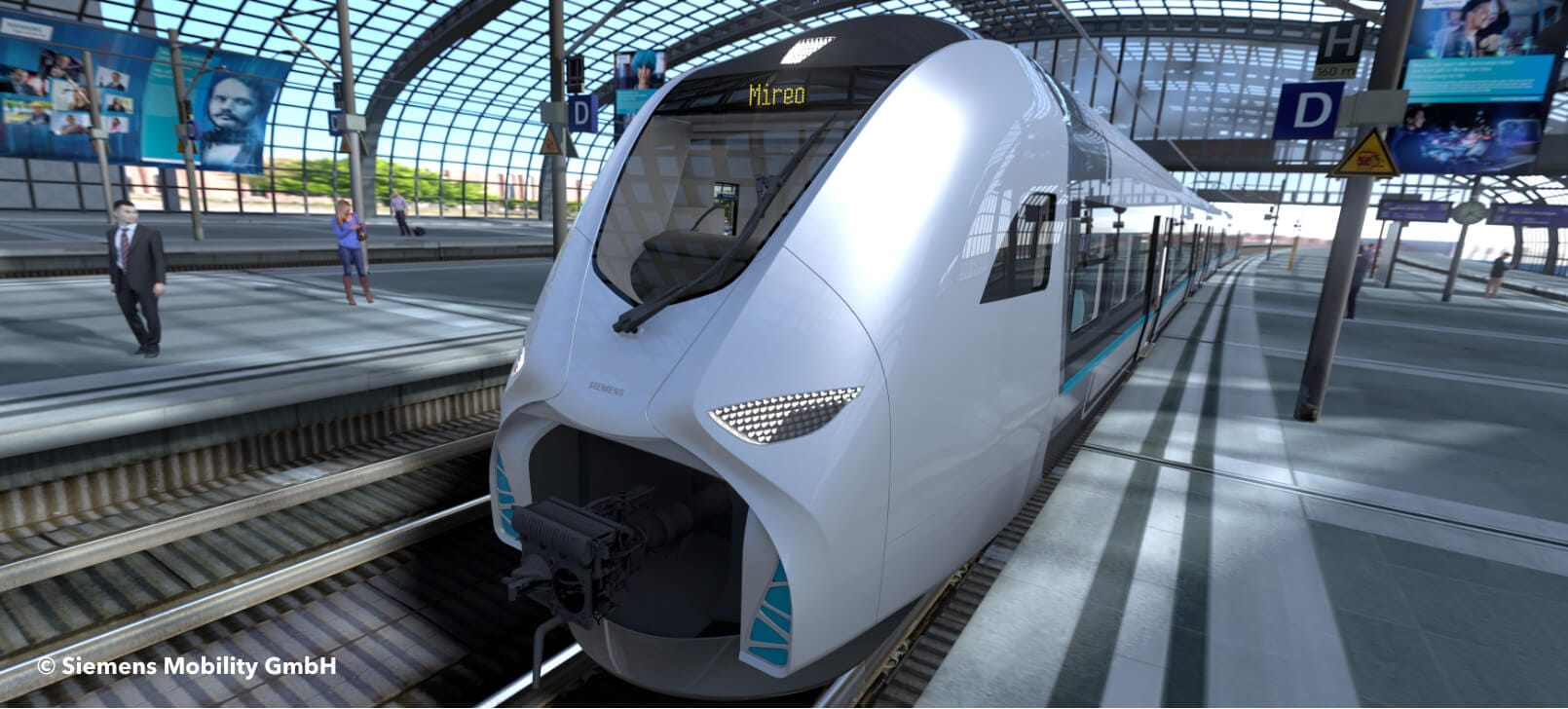
Trains, for example, suit a roof-mounted hydrogen storage system (although for instance in the UK the number of low bridges and tunnels makes this impossible). NPROXX has developed an advanced system for mounting hydrogen tanks onto a new regional train being built by a major German manufacturer.

The NPROXX system involves fewer, bigger and more efficient pressure vessels, held in an advanced mounting structure. This reduces the total number of pressure vessels required and increases the total volume of hydrogen that the tanks can store, thereby giving greater productivity while taking up less space.

NPROXX has developed an advanced mounting system to hold these vessels in place on top of the train. Traditional roof-mounting systems either strap the vessels to the roof or embed them in a metal frame that itself holds them in place. NPROXX has created a new patented mounting system that is more efficient and stronger. The cylindrical part of the pressure vessel has been extended over the roof dome to form an envelope shape, and the vessels are mounted on two metal endplates. This approach reduces the weight of the total structure including the supports.

Both the pressure vessels and the mounting system that NPROXX is supplying are designed to match the 30-year lifespan of the train. The NPROXX hydrogen tanks will support 20,000 fill cycles and the advanced refuelling technology will be able to refuel each train in just about 12 minutes, using specially designed piping and support structures.

With our wide range of technical competencies and support services, NPROXX is an ideal partner to help design, develop, manufacture and support innovative solutions in mobile and stationary hydrogen storage.

Hydrogen storage container system

10 foot hydrogen storage system appoved by TÜV

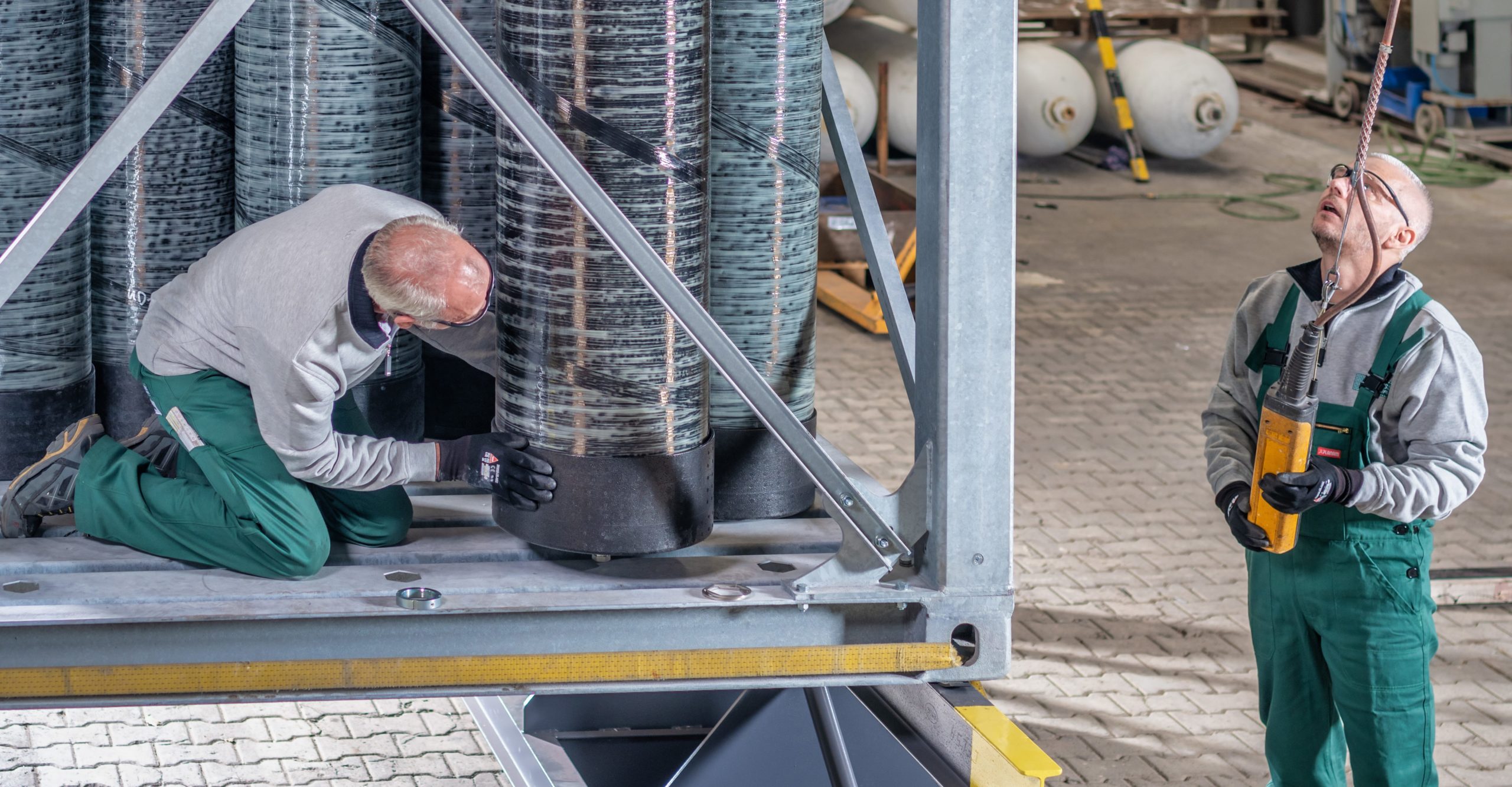
NPROXX has its first certified hydrogen storage system. The containerised 10-foot solution providing a usable H2 storage capacity of 225 kg has received approval by the certification authority TÜV on 4 June.

“Following the certification of the single pressure vessel in February this system certification is now a second important milestone reached”, comments Dietmar Müller, Technical Director at NPROXX. “This gives us the opportunity to actually sell these systems to customers in the H2 transportation and storage markets.”

The system can contain up to 36 interconnected pressure vessels and operates at a maximum working pressure of 500 bar. The product is now authorised to be used for hydrogen transportation on roads according to the international regulation for transport of dangerous goods (ADR) to the standards of a Multiple Elements Gas Container (MEGC).

For more info watch the animated NPROXX video on youtube.

Hydrogen powered cars

As the benefits of hydrogen-powered vehicles for personal use continue to become more apparent, the number of fuel cell electric vehicles (FCEVs) on the market is set to rise exponentially in the coming years.

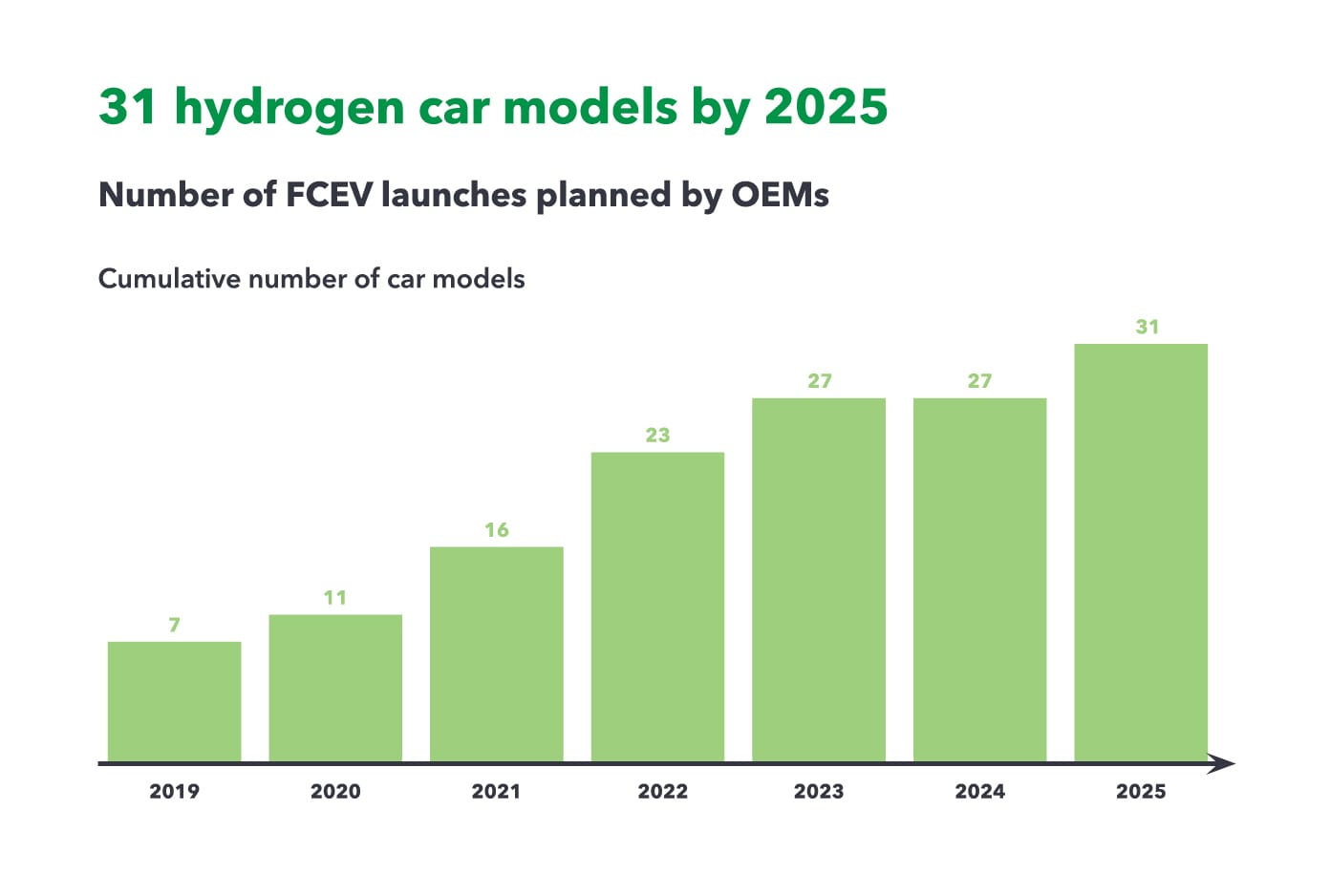
Currently there are just six FCEV models in production, including the Hyundai Nexo, Toyota Mirai and Honda Clarity. But based on our market research, NPROXX believes that number will rise to 31 separate car models on the market by 2025, with all the big names of the motoring world rushing to develop new models or adapt existing favourites to run on a hybrid of hydrogen fuel cell power and electricity.

Hydrogen as a fuel is well suited to long distances, and these new models are expected to boast ranges that exceed their oil-fuelled predecessors. As a result, the range of models being developed stretches from new mid-range saloons being developed by the likes of Toyota, Honda and Mercedes to hydrogen fuelled adaptations of existing SUV models from the likes of BMW and Audi.
31 hydrogen car models by 2025

Why Hydrogen?

With the reduction of city centre pollution an increasingly compelling issue, the allure of an emission-free mode of transport is particularly attractive to the urban market. While battery power is certainly part of the future energy mix, FCEV vehicles running on hydrogen produce only water as a by-product. As hydrogen offers a higher energy-density-to-weight ratio than batteries it offers  attractive solutions for heavier and longer- range transport needs.

One potential limitation to the mass adoption of hydrogen-powered vehicles is the scarcity of hydrogen refuelling infrastructure. But this is changing fast. In Germany for instance, there are already over 100 hydrogen refuelling stations, and a new one opens every two weeks. Other developed countries are also waking up to the potential of this need.

Why choose NPROXX?

NPROXX is a global leader in designing, developing and manufacturing Type 4 pressure vessels for the storage of hydrogen under high pressure. We are already working with several leading automotive manufacturers to design and develop hydrogen storage solutions that can be integrated into the designs of new and adapted passenger vehicles. We are also delivering hydrogen storage solutions for stationary applications (refuelling stations). If you would like to know more about NPROXX’s capabilities please contact Johannes Lorenz.